Fibroscan/Urea and Hydrogen Breath Test
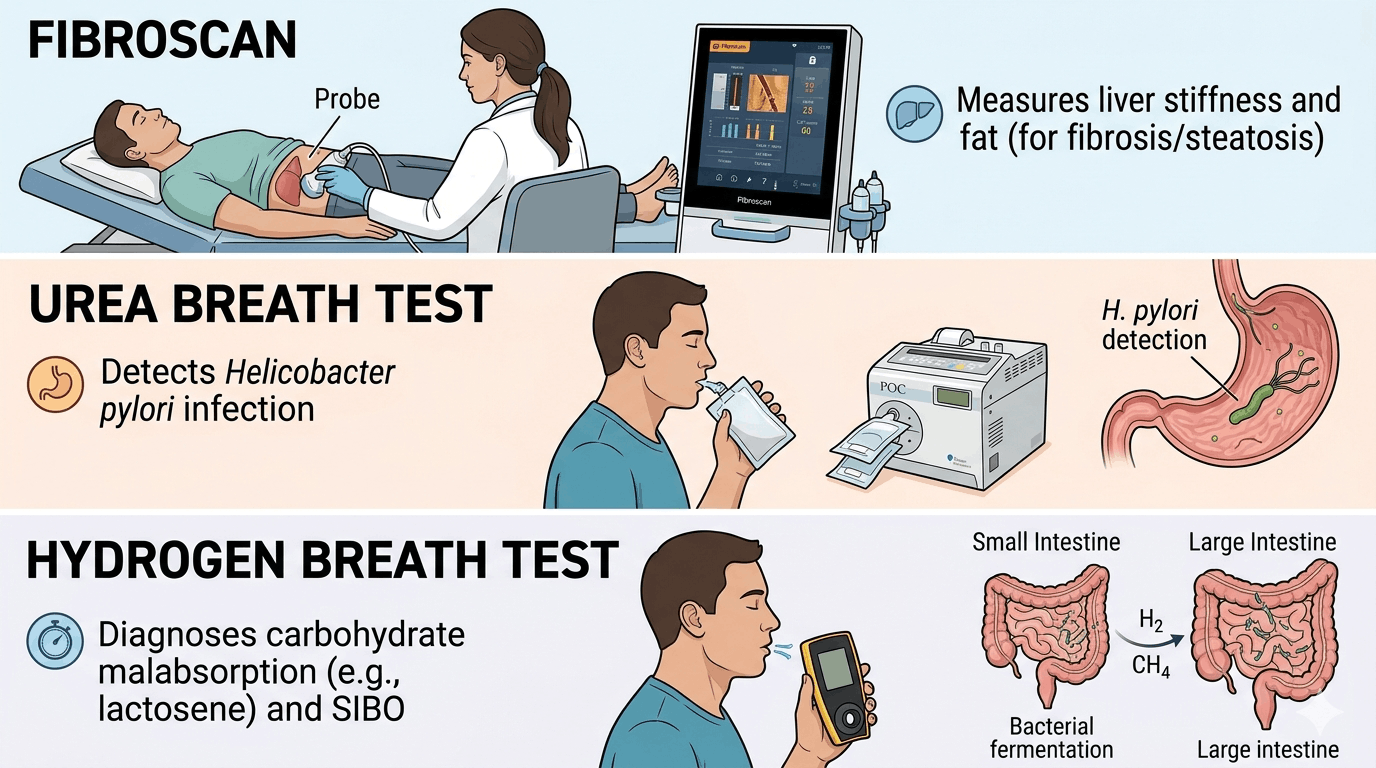
Overview
These three diagnostic tests are essential tools in modern gastroenterology for evaluating liver health, H. pylori infection, and digestive disorders. Each test is non-invasive, quick, and provides accurate results for diagnosing and managing various gastrointestinal conditions.
1. FibroScan (Transient Elastography)
What is FibroScan?
FibroScan is a specialized ultrasound machine for your liver that uses a technology called transient elastography to measure liver fibrosis (scarring) and steatosis (fatty change) without requiring a biopsy. It's a painless, non-invasive procedure that takes only 10–15 minutes to complete.
2. Urea Breath Test (UBT)
What is Urea Breath Test?
The urea breath test (UBT) is a rapid, non-invasive diagnostic procedure used to identify infections by Helicobacter pylori (H. pylori), a spiral bacterium implicated in gastritis, gastric ulcers, and peptic ulcer disease. It's also known as the H. pylori breath test.
How Does UBT Work?
H. pylori bacteria produce an enzyme called urease, which breaks down urea into ammonia and carbon dioxide. During the test, if H. pylori is present in the stomach, it metabolizes the ingested urea, releasing labeled carbon dioxide that can be detected in the breath.
3. Hydrogen Breath Test
What is Hydrogen Breath Test?
A hydrogen breath test is a simple, non-invasive test used to measure the amount of hydrogen gas in the breath after consuming a sugar solution. It helps diagnose sugar intolerances (lactose, fructose) and Small Intestinal Bacterial Overgrowth (SIBO).
How Does It Work?
Normally, hydrogen is produced by bacteria in the large intestine. If hydrogen is detected in the breath early (after small intestine), it indicates:
- Bacterial overgrowth in the small intestine (SIBO)
- Sugar malabsorption – sugar not absorbed properly, reaching bacteria in large intestine